Project
Detecting Fire Sprinkler Pipe in 360° Site Photographs
Part of Vveer Motani's portfolio · Robotics & Physical AISee everything →In short
My B.Tech project at IIT Bombay, supervised by Prof. Varun Kumar Reja and done with an industry partner in construction.
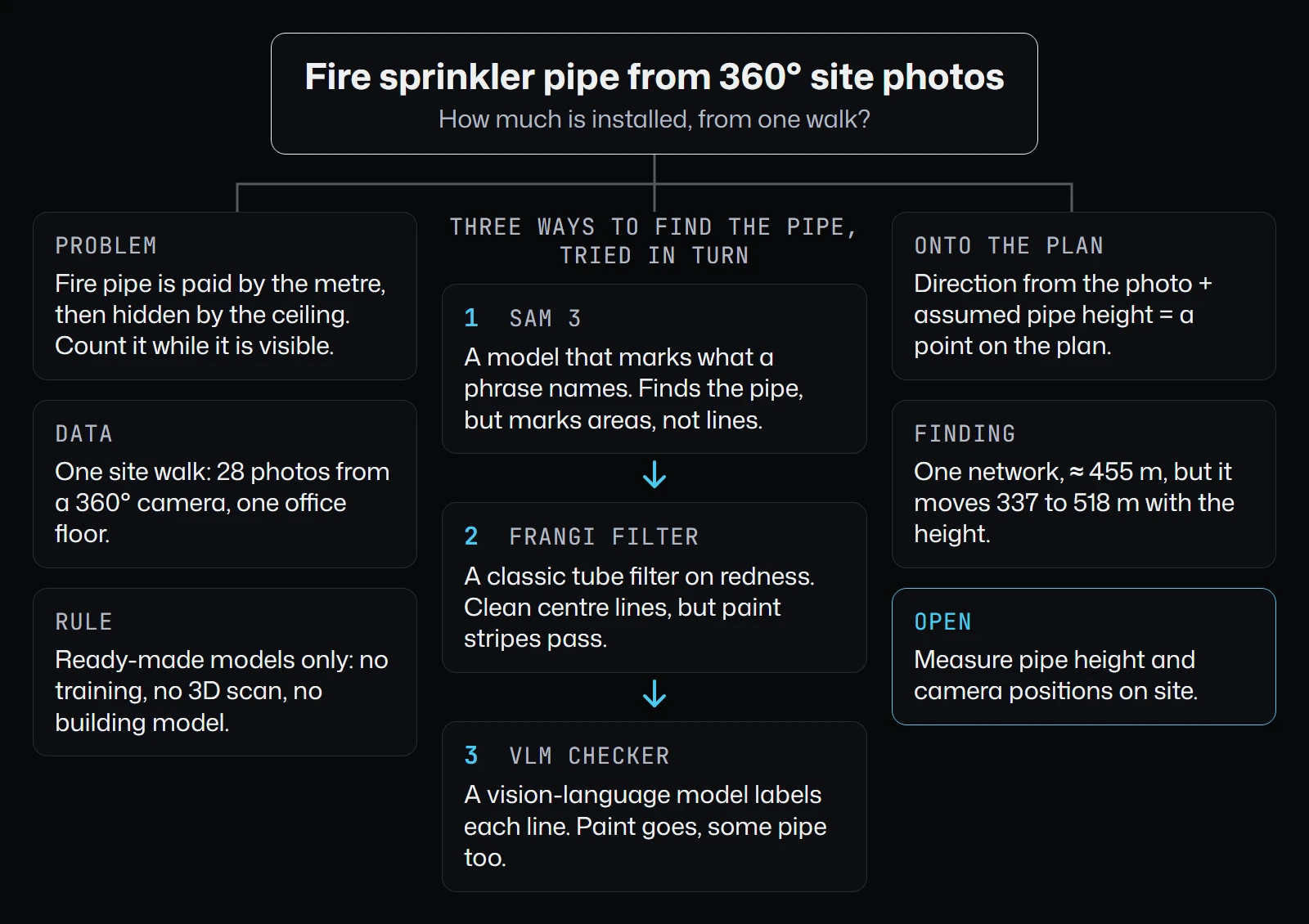
Fire sprinkler pipe is paid for by the metre and hidden once the false ceiling goes in, so it has to be measured while it is still visible. I built a pipeline that finds the pipe in the 360° photos of a single site walk, using ready-made models with no training for the site, and joins it into one network on the floor plan.
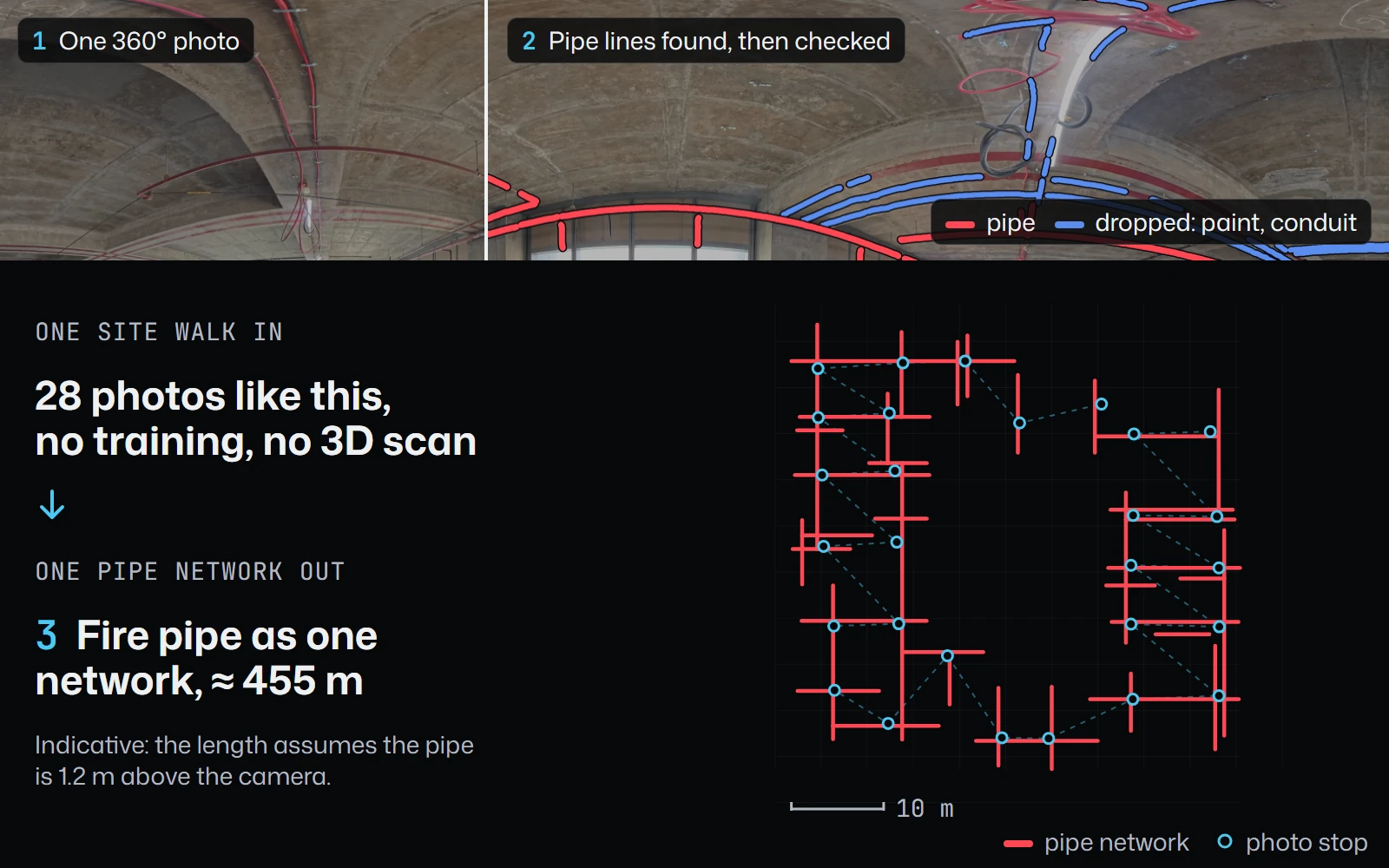
One site walk in, one pipe network out: about 455 m of pipe from 28 photos, if the pipe is 1.2 m above the camera.
At a glance
How I did it
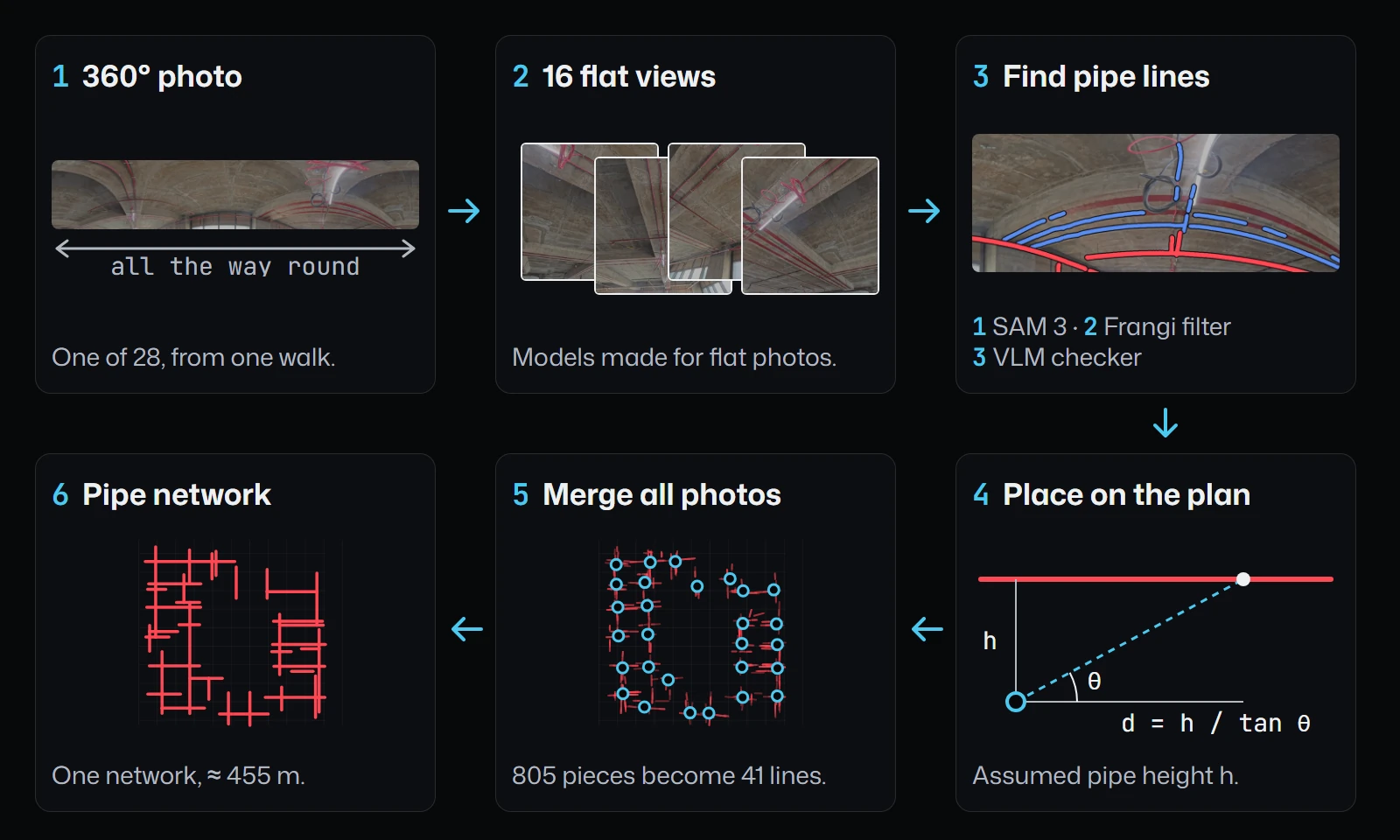
From photo to network. A point in a photo is only a direction; an assumed pipe height turns it into a point on the plan.
Each 360° photo is cut into 16 flat views so that standard models can read it. I then tried three ways to find the pipe, each because the one before fell short:
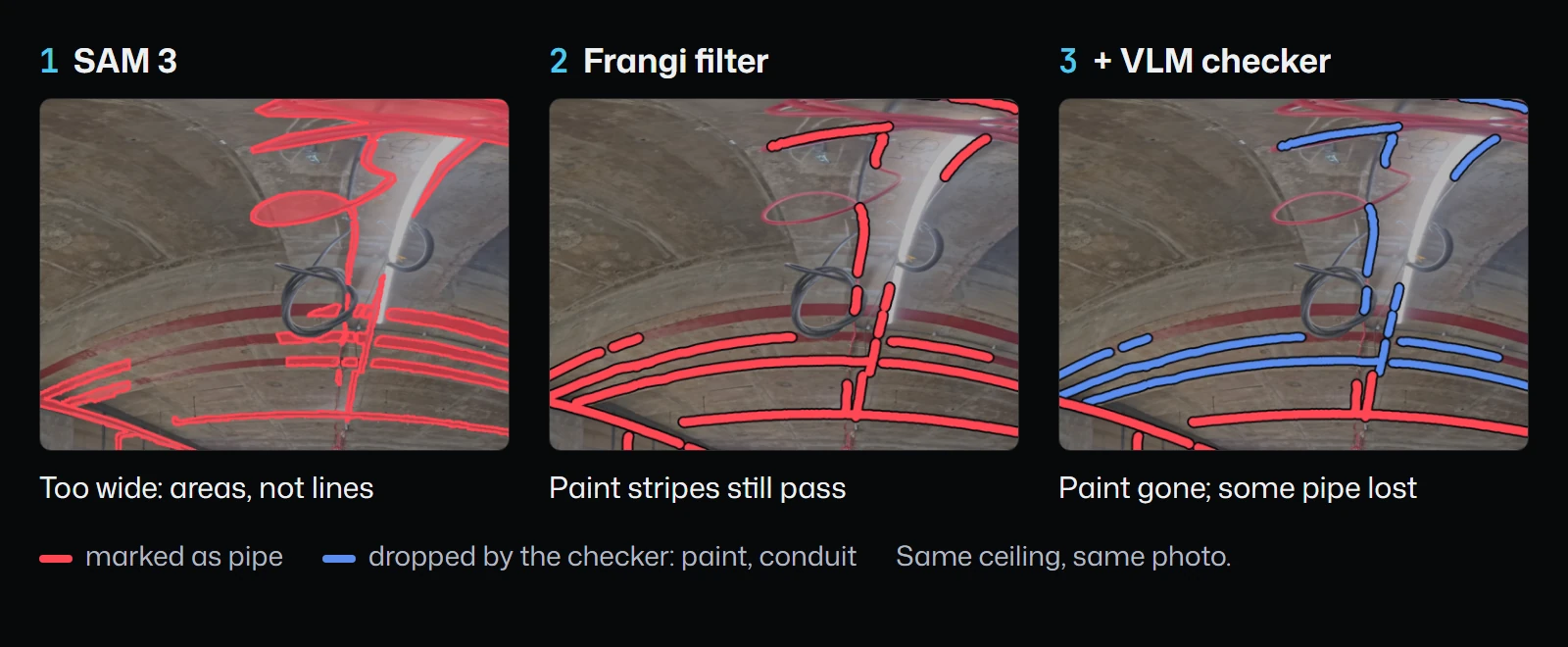
- Approach 1: SAM 3. Meta's segmentation model, asked for "red pipe". It finds the pipe, but marks wide areas, not lines.
- Approach 2: Frangi filter. A classical line filter on redness. Thin centre lines and about six times faster, but painted stripes pass as pipe.
- Approach 3: VLM checker. A vision-language model (Claude Haiku) labels every line pipe, paint or conduit, and only pipe is kept.
Finally, every line is placed on the floor plan and lines seen from different photos are merged into one network.
What I achieved
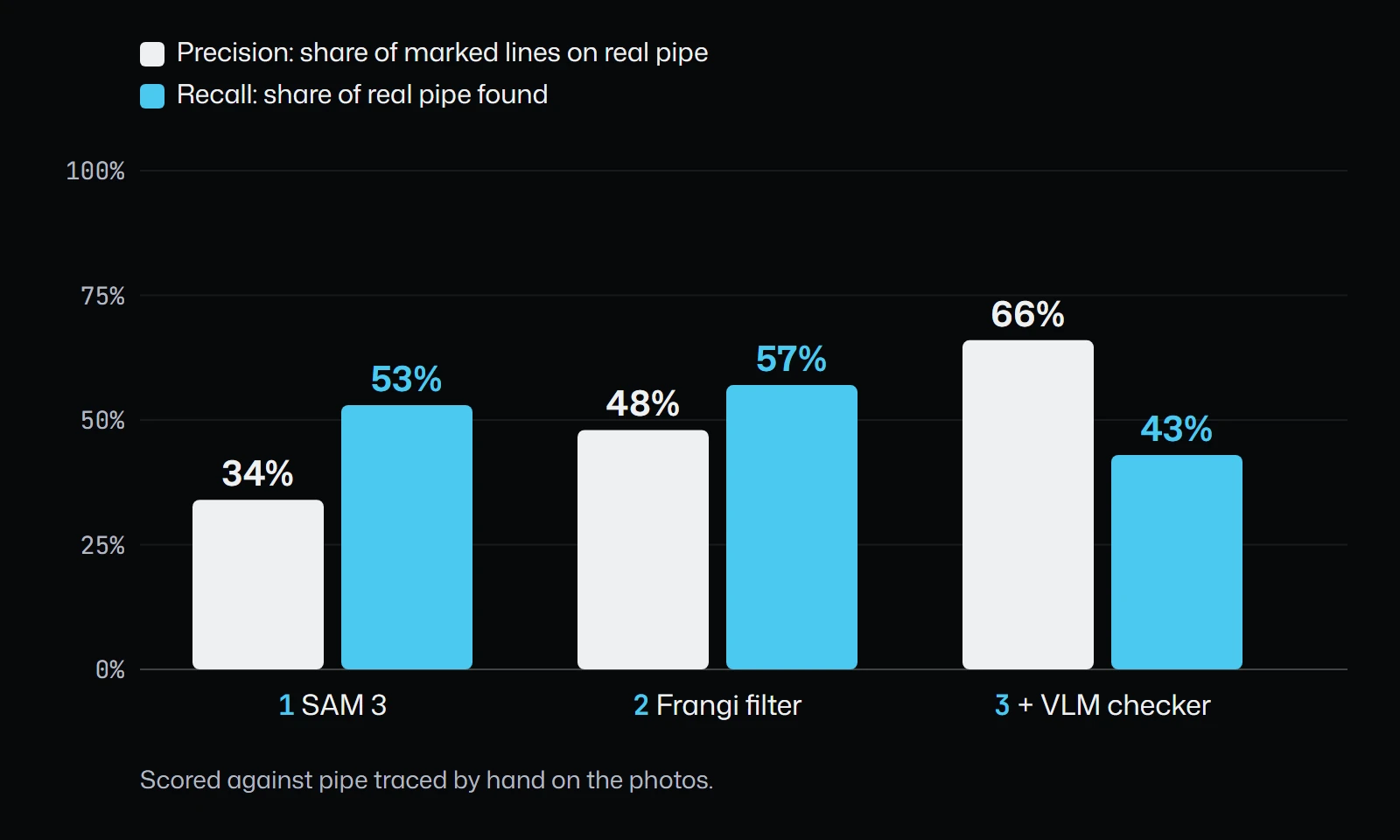
Each approach marks more real pipe than the one before (precision 34%, 48%, 66%). The checker also drops some thin pipe: in its run, recall fell from 58% to 43%. Scored against pipe traced by hand, so these are project results, not a benchmark.
- A working pipeline from site photos to a pipe network, with no training for the site, no 3D scan and no building model.
- The 28 photos merge into one network of about 455 m on the plan.
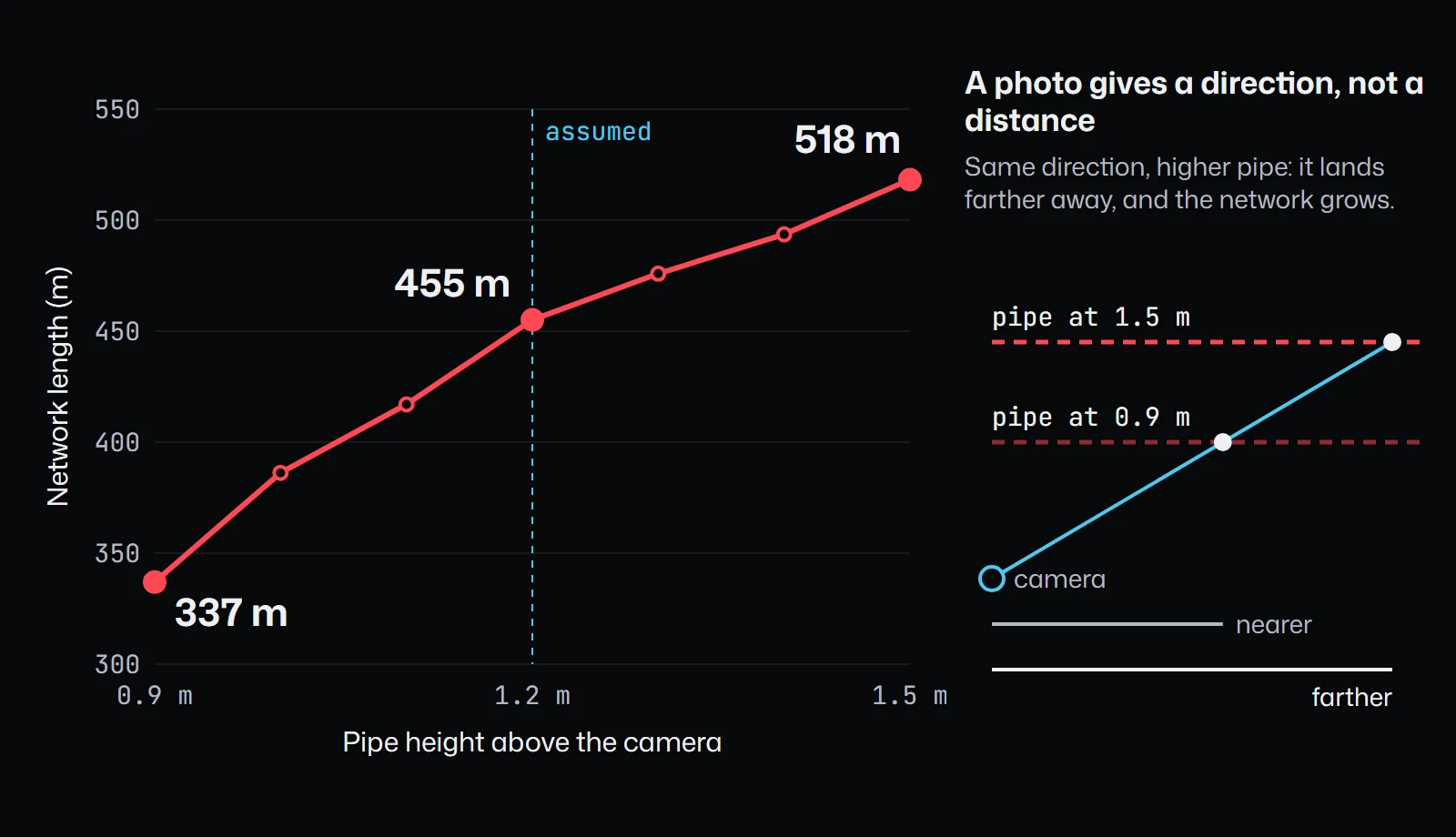
That length depends on one number the photos cannot give, the pipe height: 337, 455 or 518 m for 0.9, 1.2 or 1.5 m.
What I learned
- The words matter. SAM 3 found the pipe when asked for "red pipe", but "fire sprinkler pipe" also caught black conduit.
- A classical filter can beat a large model on a narrow task. The Frangi filter drew cleaner lines than SAM 3 in about a sixth of the time.
- A VLM works best as a checker. It is good at telling pipe from paint, but it can only remove lines, never find the ones that were missed.
- A photo gives a direction, not a distance. For a length you can bill, the pipe height and the camera positions have to be measured on site.
Poster
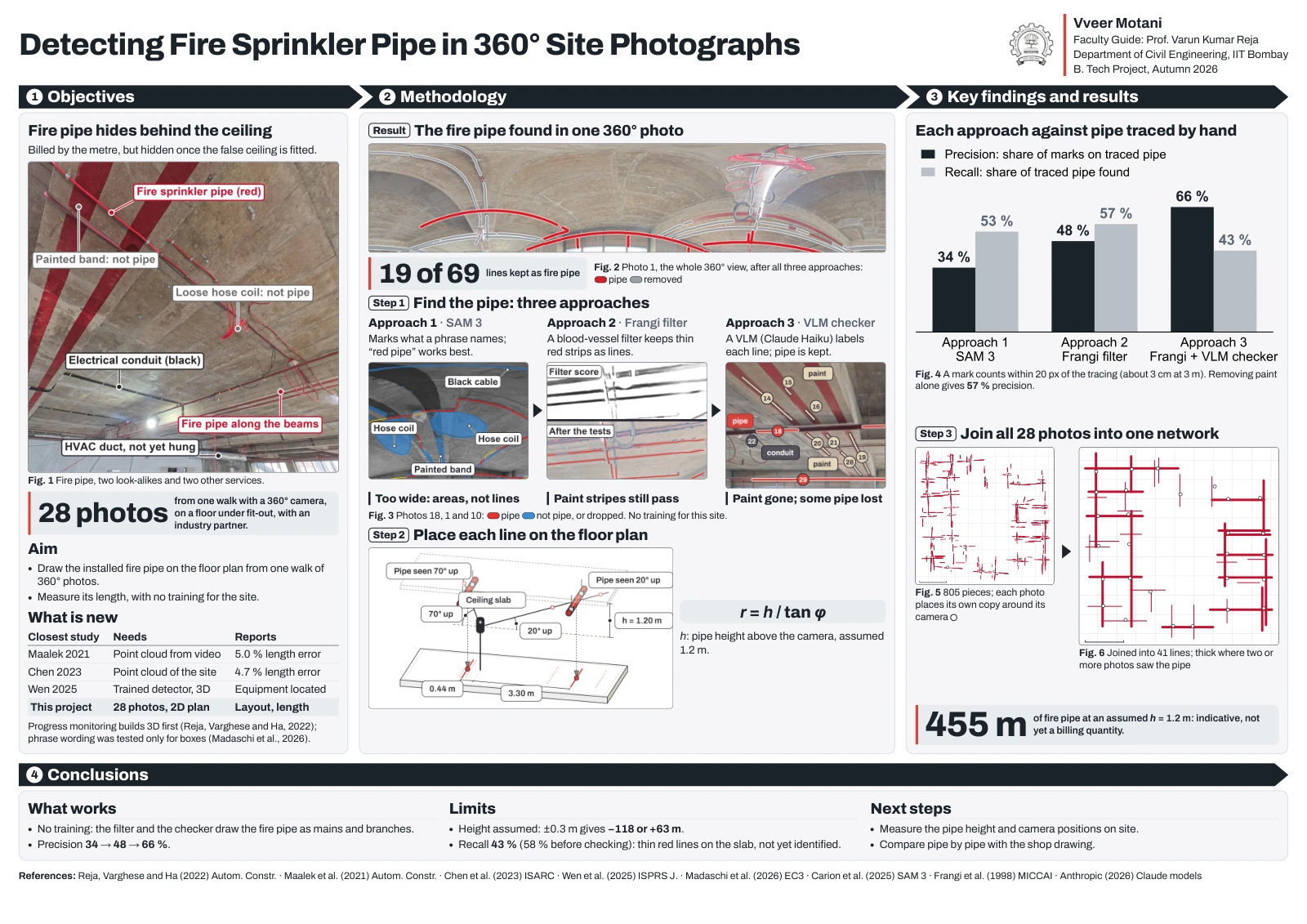
The project poster. Click it to open the full-size PDF.